Nonprofit Fraud Cases 2025: Latest US Scandals and How Weak Controls Enable Them
As the nonprofit sector continues to grow, so too does the sophistication and scale of fraud targeting these organizations. In 2025, several high-profile nonprofit fraud cases have emerged, revealing disturbing patterns of executive theft, sophisticated embezzlement schemes, and alarmingly weak internal controls that continue to enable millions in losses.
This comprehensive analysis examines the latest scandals, the methods perpetrators use, and—most importantly—what organizations can do to protect themselves and their donors’ funds.
Image Grid 1









The State of Nonprofit Fraud in 2025
According to the latest reports from the Association of Certified Fraud Examiners and the IRS, nonprofit organizations remain uniquely vulnerable to financial misconduct. The combination of public trust, complex revenue streams, and often inadequate financial oversight creates an environment where fraud can flourish undetected for years.
In the first half of 2025 alone, documented nonprofit fraud cases have already exceeded $87 million in confirmed losses, with many more cases still under investigation. These incidents span organizations of all sizes—from local community nonprofits to nationally recognized charities.
Top Nonprofit Fraud Cases Making Headlines in 2025
The Children’s Future Foundation Embezzlement
One of the most shocking cases of 2025 involves the Children’s Future Foundation, where former CFO Amanda Richardson allegedly diverted over $4.2 million over a 37-month period. Richardson utilized a sophisticated scheme involving fake vendor accounts and manipulated grant reimbursements.
Image Grid 2







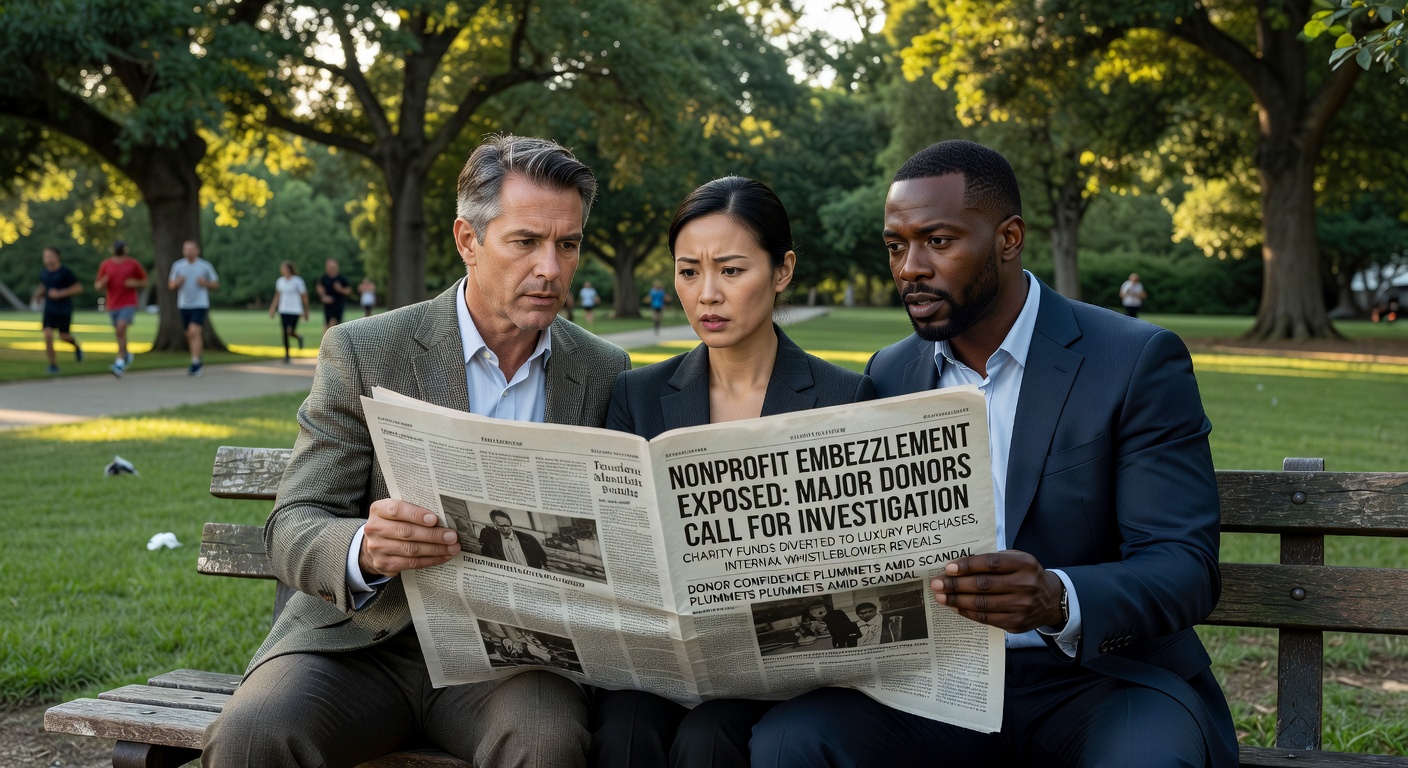

Investigators discovered that the organization had no segregation of duties in its accounting department, allowing the CFO to both approve and process wire transfers. This case perfectly illustrates how the absence of basic internal controls can enable large-scale fraud.
University Alumni Scholarship Fund Scandal
A prestigious university-affiliated scholarship fund lost nearly $6.8 million when its executive director, Dr. Michael Chen, created fictitious scholarship recipients and redirected funds to personal accounts. The scheme lasted for nearly five years before detection.
The investigation revealed that board members rarely reviewed financial statements in detail and had placed excessive trust in the long-tenured executive without implementing appropriate oversight mechanisms.
Environmental Justice Network Theft
The Environmental Justice Network, a prominent advocacy organization, discovered in early 2025 that its former development director had been diverting corporate sponsorship funds through a complex network of shell companies. The total estimated loss reached $2.9 million.
This case highlighted a growing trend: the exploitation of restricted funds. The perpetrator took advantage of the organization’s poor fund accounting practices to reallocate restricted donations for personal use.
Common Embezzlement Schemes in Nonprofits
Analysis of 2025 nonprofit fraud cases reveals several recurring patterns that fraudsters exploit:
- Fictitious Vendor Schemes: Creating fake vendors and processing payments for nonexistent services. This remains the most common method, accounting for approximately 38% of documented cases.
- Expense Reimbursement Fraud: Inflated or completely fabricated expense reports, particularly common among executives who face less scrutiny.
- Payroll Fraud: Ghost employees, inflated salaries, and unauthorized bonuses. Several 2025 cases involved executives adding family members to payroll with no actual work performed.
- Wire Transfer Manipulation: Taking advantage of organizations that allow single-person authorization for electronic transfers.
- Grant Fund Diversion: Misrepresenting the use of grant funds, especially problematic as government grants become increasingly scrutinized.
Executive Theft Patterns in 2025
A disturbing trend in current nonprofit fraud cases is the high percentage of perpetrators in positions of significant authority. In 2025, approximately 63% of major fraud cases involved either an Executive Director, CFO, or board treasurer.
Why Executives Commit Fraud
Three primary factors appear consistently across 2025 cases:
- Financial Pressure: Many executives faced personal financial difficulties including divorce, gambling debts, or failed side businesses.
- Opportunity: The lack of oversight from disengaged or underqualified board members created environments where fraud could continue for years.
- Rationalization: Perpetrators frequently justified their actions with narratives about “underpayment” or “the organization owes me.”
How Weak Internal Controls Enable Nonprofit Fraud
The most preventable aspect of these scandals is the consistent failure to implement basic internal controls. Analysis of recent cases reveals several critical weaknesses:
Absence of Segregation of Duties
This remains the single most common control failure. In many smaller and mid-sized nonprofits, one individual often handles multiple financial functions that should be separated—creating, approving, and recording transactions.
Inadequate Board Oversight
Many boards treat their role as purely ceremonial rather than fiduciary. In several 2025 cases, board members admitted they rarely reviewed detailed financial reports or questioned unusual transactions.
Poor Financial Reporting Practices
Organizations that don’t produce timely, accurate financial statements with proper fund accounting create an environment where fraud can remain hidden. Several recent scandals involved organizations that produced financial statements only once per year.
Lack of Technology Controls
Despite the availability of sophisticated accounting software, many nonprofits still use outdated systems with weak security protocols and audit trails.
Red Flags That Boards and Donors Should Watch For
Based on patterns from 2025 nonprofit fraud cases, here are critical warning signs:
- Executives who consistently resist implementing stronger financial controls
- Unusually high staff turnover in the finance department
- Financial reports that are consistently late or overly complex
- Executives living beyond their apparent means
- Reluctance to undergo independent financial audits
- Significant changes in donation patterns without clear explanation
Best Practices to Prevent Nonprofit Fraud in 2025 and Beyond
Organizations that have successfully strengthened their controls share several common approaches:
Implement Robust Internal Controls
Even small organizations can implement basic segregation of duties by involving multiple people in financial processes. Banks can be instructed to require dual authorization for transfers above certain thresholds.
Strengthen Board Financial Literacy
Boards should include members with financial expertise and implement regular training for all members on their fiduciary responsibilities.
Conduct Regular Independent Audits
Annual audits by reputable CPA firms with specific nonprofit experience should be considered non-negotiable for organizations with budgets exceeding $500,000.
Leverage Technology Solutions
Modern accounting platforms with built-in controls, approval workflows, and real-time reporting can significantly reduce fraud risk.
The Impact Beyond Financial Loss
The damage from nonprofit fraud cases extends far beyond the stolen funds. Organizations often face decreased donor confidence, negative media attention, and in some cases, complete operational collapse. The most tragic consequence is the loss of services to the communities these organizations were created to serve.
Conclusion: Building Fraud-Resistant Nonprofits
The nonprofit fraud cases of 2025 serve as a sobering reminder that good intentions alone cannot protect an organization’s assets. Every nonprofit, regardless of size or mission, must implement appropriate financial controls and maintain vigilant oversight.
Donors, board members, and executives all have roles to play in creating a culture of transparency and accountability. By learning from these latest scandals and implementing proven prevention strategies, the nonprofit sector can work toward rebuilding and maintaining the public trust it depends upon.
For organizations seeking to evaluate their fraud risk and strengthen their controls, resources like NFTransparency.com offer valuable guidance and assessment tools designed specifically for the unique challenges facing American nonprofits.
The choice is clear: organizations can either learn from the hard lessons of 2025’s nonprofit fraud cases or risk becoming the next headline.